 Viewpoint Magazine
Crisis Theory
In 1977 Louis Althusser gave a famous speech in Venice on “the crisis of Marxism,” a thesis almost as scandalous as that of an epistemological break in Marx’s thought.
In 1977 Louis Althusser gave a famous speech in Venice on “the crisis of Marxism,” a thesis almost as scandalous as that of an epistemological break in Marx’s thought.
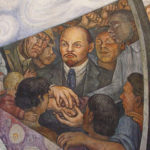
If we want to call the “Lenin question” the problem of organization opened in the 1970s and today newly again before us, we can certainly do so, provided that it is understood that the watchword of Lenin does not mean nostalgia or organizational fetishism, but is rather a new solution for the problems that he had posed and victoriously resolved.

Only a radical change in the whole existence of the working class woman, in the conditions of her home and family life, as she acquires equal status with men in civil law will wipe out once and for all the barrier which to this day prevents the woman worker letting her forces flow freely into the class struggle.

Kollontai’s life reflected the political turns of the revolution, just as her fame since her death has fluctuated. Our organizational reality is not hers, yet her works continue to pose key questions for women’s liberation and the revolutionary movement.
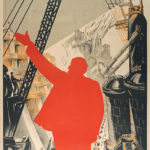
What might “All Power to the Soviets” mean in the present moment? I sense that it means: to build a movement, to unite forces where we find them, to form coalitions, elaborate material goals to organize all those who work and are exploited, to constitute power, to articulate a hegemonic strategy.

Francesco Raparelli: An original “constellation” of capital is presented in Border as Method. The notion of the “multiplication of labor,” in particular, clearly grasps the “great transformation” in which we are immersed. Is a communist politics that takes seriously the irreducible multiplicity of exploitation that you describe so well still possible? Sandro Mezzadra: My work with Brett, Border as Method,… Read more →

Federica Giardini: In your trajectory there is the experience of being a sex worker, of STRASS (Syndicat du Travail Sexuel), and of advocating against campaigns for the abolition of prostitution. In which ways does sex work occupy the frontlines for analysis, critique, and the creation of new possibilities? Morgane Merteuil: As a sex worker I’ve grappled with different feminist discourses.… Read more →

Chiara Giorgi: Karl Marx’s representation of communism was that of an alternative to capitalism, the ground for which it had in fact already prepared. This idea opened up one of the main questions of communism, namely the very notion of transition. In The Philosophy of Marx, you have observed that, far from embracing an evolutionist view, the transition foreseen by… Read more →

Francesco Raparelli: In The Labor of Dionysus (co-written with Michael Hardt), you insist on the centrality of the “prerequisites of communism” in describing the contemporary mode of production, by which you mean language, affects, and mobility, which have become pillars of capitalist valorization. Rather than invalidating this analysis, the crisis which exploded in 2008 seems to have confirmed it. Do… Read more →

Certainly we must assert the novelty, the originality, the autonomy of Marxism. But the novelty of Marxism against any other philosophy consists not in asking more of it as a philosophy; its originality consists in its offer of science to philosophy, or rather in its conceiving the proper philosophy only as science, as a “specific conception of a specific object.”