 Viewpoint Magazine
This post is part of our ongoing debate on the relevance of Lenin, which started with Salar Mohandesi and Todd Chretien. See the response by Pham Binh, and Mohandesi’s final response.
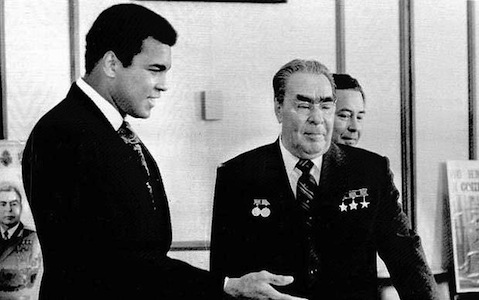
“During the lifetime of great revolutionaries, the oppressing classes constantly hounded them, received their theories with the most savage malice, the most furious hatred and the most unscrupulous campaigns of lies and slander. After their death, attempts are made to convert them into harmless icons, to canonize them, so to say, and to hallow their names to a certain extent for the ‘consolation’ of the oppressed classes and with the object of duping the latter, while at the same time robbing the revolutionary theory of its substance, blunting its revolutionary edge and vulgarizing it.” – Vladimir Lenin, State and Revolution
“Asked afterwards about whether the Russian circus was going to kill the tiger involved, the trainer responded with honesty. ‘If we were to shoot every tiger that attacks us, there wouldn’t be any remaining.’” – Jason Hribal, Fear of The Animal Planet
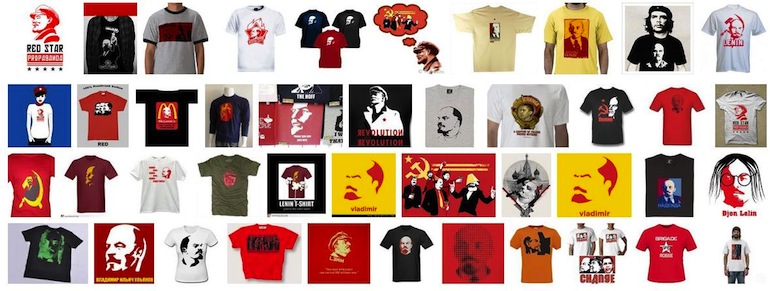
Comrade Lenin is just one in a long line of heroes I don’t know a lot about. He’s the kind of historical character engineered to model, made for a time when revolutionaries pinned up newspaper headshots over their beds and went to bed vowing to wake up and be more like Che or Mao or Gaddafhi or Carlos or Ulrike or Huey or even masked Marcos. The 20th Century saw Communist Parties and partying communists, but both had their icons. We are, however, iconoclasts; some bold sans-serif lulz-text in place of a black line.
This will then be a series of somewhat disjointed thoughts about organizational and strategy in the short-medium term.
I begin with an observation: we do not have a party. Whether we ought coalesce into a party to maintain and grow the Occupy sequence is beside the point; what is clear is that we have not and do not appear to intend it any time soon. The inquiry should then be along these lines: why don’t we have a party, and why won’t we be making one?
The August 2 General Assembly in New York marked a shift away from the tongue-biting tolerance the hard-left has offered socialist parties. We went into the plaza with a party and came out with a strategy instead. For all the grousing about a minority of anarchists who screw everything up, no one has put forward an alternative organizational program to loose consensus that doesn’t get them laughed out of the trust circle. Remember when the OWS “Demands Working Group” was a thing? Neither does anyone else. Throughout the whole process I’ve heard a lot of calls for some kind of restrained decision-making hierarchy, but I’ve not once heard anyone put themselves forward to lead. And with good reason: we’d assume they were a cop or a con, a co-opter or a crazy.
Salar calls in his remarks for “an historically specific program” and then ends, for that’s the limit. To actually prescribe the program would be to misunderstand his relationship as a scholar and theorist to the actions in the street. These days no one is expected to command the army, conquer the dialectic, and conduct the marching band at the same time.
Todd’s pedantic article is a perfect example of why we should be careful not to be too careful. Revolution is not a genie lying dormant since 1917 in the right underused library book. By the end of his statements, he has reduced the goal of the discussion to sparking another sustained examination of the strengths and weaknesses of the Russian Revolution. If this is accomplished “then we will have done our jobs.” As a scholar, perhaps this is the case – I wouldn’t know, I’m not a specialist in the field – but no revolutionary’s job is done with the raising of awareness or debate.
It seems worth noting that the badge-check gate at Left Forum, where Salar and Todd gave their remarks, was stormed by marchers under an “Occupy” banner, who went around the conference beseeching participants to join them at Zuccotti Park only a couple blocks away rather than deliberate about the future of the occupation inside an expensive event. Some joined, most did not.
Revolutionary theory should inform our behavior in the streets, but certainly no more than our experiences in the streets should inform our theory. It has been astonishing to see how disciplined, creative, but most importantly, intelligent, I’ve seen crowds be during this sequence. Much has been made of Twitter’s role in aiding in the coordination of demonstrations, but there’s been less said about the amount of capital invested in making these activists strong post-Fordist workers. The same traits that the “knowledge economy” valorizes (spontaneity, ambition, self-organization, quick always-on communication, working in teams) are what have enabled the occupations to take hold in the particular form that they have. “Idle chatter” between workers was a threat on the Fordist production line, now it’s a site of capture. We’re trained to do it. Of course the revolutionary workers went to look for Lenin at the crucial moment – but would we?
A historicized analysis has to take capital’s role in the production of subjectivity seriously, not as a spell to be undone or a veil to be lifted, but as a material element of a revolutionary situation. Capital births its own very specific gravediggers; or, to do some violence to a couple of sage koans: you don’t go to war with the army you want, but if you try sometimes, you just might find, you go to war with the army you need.
If capital really wanted to cripple Occupy, it could stop producing Adderall. But it can’t.
 |
 |
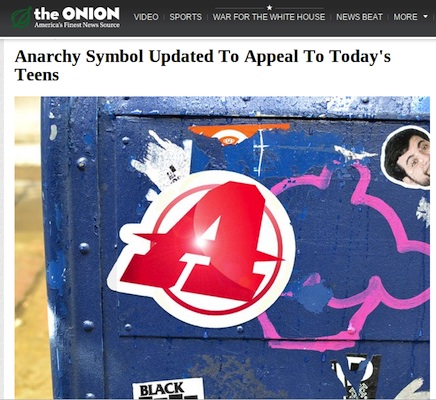
The juxtaposition of the above images raises a couple questions I want to address. First: its relation to the Lenin quote that begins both this piece and State and Revolution, and second: what it has to do with a party. These are the same question.
1.
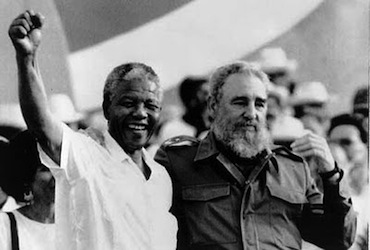
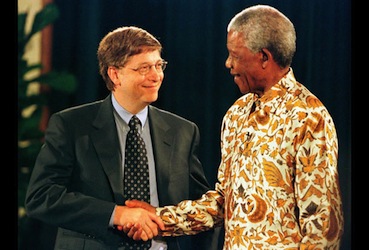
Lenin is writing of Marx, but a better contemporary example might be Cornel West’s description of anti-apartheid militant Nelson Mandela’s rehabilitation in Occidental eyes as “Santa-Clausification.” And he’s not even dead.
 |
 |
Capital must grow to survive – we all agree on this. That means subsuming new spaces of human activity, a literal and figurative colonialism. Over time, there are fewer and fewer spaces left to invade, but the need for growth doesn’t diminish. There are a few options, one of which is to colonize and extract value from the future through the innovation of financial products and the growth of student debt. But capital inevitably faces what Alberto Toscano describes as a double bind, having to encourage thought and behavior that is not yet necessarily in its interest. The Matrix popularized this line of thought when the writers had to find a way to explain why revolution was still possible in a reality completely manufactured by malevolent machines: if it weren’t, the whole program wouldn’t work. A circus needs tigers.
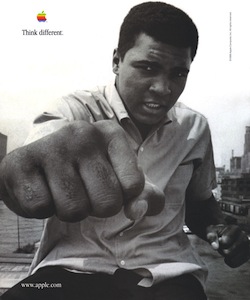
The recuperation Lenin describes definitely still happens – most notably in Apple’s “Think Different” series, an almost comically textbook application of the theory – but methods must develop with the growth. While Marx could be exclusively “hounded” in his lifetime, today’s capitalists don’t have that luxury. But revolutionary affect is a dangerous space for a capitalist to tread – if it weren’t, the program wouldn’t work. No risk, no reward. Unleash the chaos.
 |
 |
His own subsumption didn’t have to come into Lenin’s decision calculus as a leader. He could reasonably believe his political program could advance faster than its appropriation. We no longer have that luxury; instead, we wonder what’s going to be in Ben and Jerry’s Occupy flavor. And I’m not just talking about the formal subsumption of revolution either – using at-hand pitchforks and buying guns and relying on rentiers like Twitter, Livestream, and Kickstarter are three different things. I’m talking your-face-on-a-t-shirt-while-you’re-still-alive shit. Appropriate or be appropriated. We don’t need more icons, we need more black lines.
 |
 |
2.
Passive voice is nearly always a hint to look closer, to find the subject. Who is the subject in “Anarchy Symbol Updated To Appeal To Today’s Teens?” The answer to the joke about the limits of capital’s ability to subsume its own antagonists is repetition in a flat voice: Sell anarchy! Sell anarchy. And by who else but a brand that had hit the limit of sexploitation advertising, accidentally associating themselves with the desperation that underlies the appeal. Who updates the anarchy logo? The market does.
http://www.youtube.com/watch?v=KT16DcHcjRA
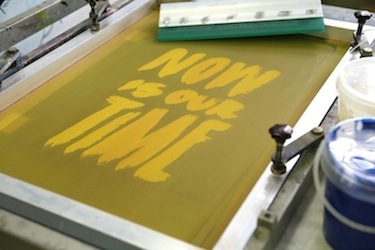
Witness Levi’s having to pull this ad because of the Tottenham riots. It ended up coming off in context as a really strong propaganda short-film in favor of generalizing the unrest. One of the arguments against partyless organization and spontaneous action is that there is no time to craft a message in advance. But here it was, off the air but in the YouTube bloodstream, perfectly calibrated. After all, you can’t just sell people jeans any more. That no video editor took the five minutes necessary to cut out the Levi’s branding and paste in “solidarity means attack” is a crime.
Of course, the Axe marketing campaign leaves something to be desired when it comes to revolutionary instigation. But who says we can’t all be guerrilla marketers for Anarchy? It would be easy to make official-looking Axe Anarchy t-shirts because the logo is a graffiti stencil. The fake shirts would be realer than the real thing. Unilever has already spent millions making Anarchy a trusted brand; capital doesn’t just birth its grave diggers, it equips us with machinery.
If we have a party, we have the only party that finds a way to include everyone in its operation, the party that works whether members believe in it or not, the only one that’s structurally invulnerable to any single member being killed or discredited.
Who turned the occupations into Occupy?
Tiqqun has attempted to theorize such an organization in the form of the “Imaginary Party,” which “composes itself to this day of the negative multitude of those who do not have a class, and do not want to have one, of the solitary crowd of those who have re-appropriated their fundamental non-appearance in commodity society under the form of a voluntary non-participation in it.” Here membership in the party is based on a kind of awareness and a corresponding refusal: “there are in this society but two parties: the party of those who pretend that there is but one party, and the party of those who know that there are in truth two. Already from this observation, one will know to recognize our party.”
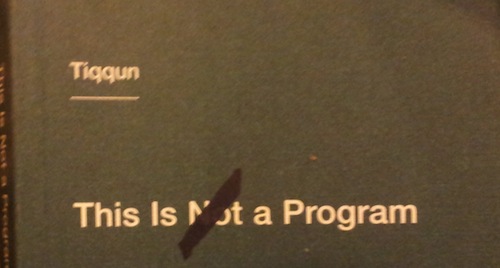
One part Bartleby, one part Fight Club, this “voluntary non-participation” deserves some more scrutiny. Participation and party have the same root, but I have to assume the Imaginary Party does not just include the very few people in the West totally self-excluded from commodity society. When Tiqqun describes the conservative segments of the Party (“libertarian militias, right-wing anarchists, insurrectionary fascists, Qurbist jihadists, ruralist militias”), the list includes groups that could hardly be said to be non-participants. American Renaissance held their last national conference at an Olive Garden. To break a window is to employ a glazier. Your books have barcodes too. If membership in the Imaginary Party is determined by style of life, then as a revolutionary organization it will remain decidedly imaginary.
So we’re talking about some sort of non-compliance of the will, of the spirit, if not of the hands and stomach. There are two parties: those who get something fundamental about this reality and those who don’t. The awake and the asleep.
That the Imaginary Party is apparently constituted in large part by organized and violent misogynists doesn’t come up.
But in Sanford, Florida, is it the armed Nazi patrolling the streets or whoever put six shots in an empty cop car that’s a member of the Party? In the event that the two come in contact, would that be what Tiqqun calls the intra-Party civil war? The process they call “party building?” Which of the two parties was Trayvon Martin, forever associated with Skittles and Arizona Iced Tea, in? I believe any conceptual apparatus or political map that can’t at very least address this conjunction of actors will be irrelevant in the time-frame I’m attempting to think.
In Tiqqun’s formulation then, I’m a member of the first of one party. There is indeed one party, and we’re all participants.

I once met an Italian at a conference who told me over beers about how he and his comrades used EU grants designed to facilitate cross-border youth cultural exchange to convene groups of revolutionary communists. He must have sensed some hesitation on my part because he pulled up his sleeves and thrust his arms toward me as if the words were no longer in his throat but in his palms: “These hands are not clean! There are no clean hands!”
To return to my original question: we won’t be having a party because, like a goldfish looking for a glass of water, we already have one – we are a party to the capitalist state. The CP is organized but riddled with contradiction, always trying to run and untie its own shoes at the same time. Within the party of capital, the Left is just one of dozens of esoteric millenarian sects devoted to the wider organization’s self-destruction. Not predetermined, but foretold in a great many languages and codes.
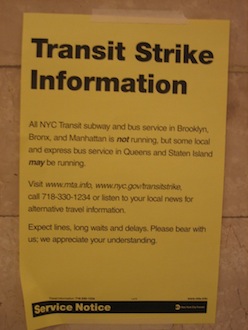
Sabotage occurs from the inside, with and to the equipment at hand. To put down our tools – either in search of the perfect working class organizational “sword” or to wedge our hands in the gears – would be to put down our tools. A militant policy of stopping capital’s flows leaves you standing in the middle of the street hugging a truck’s bumper. But grab a few reflecting vests and a few signs and suddenly you’re directing a column of speeding steel.
 |
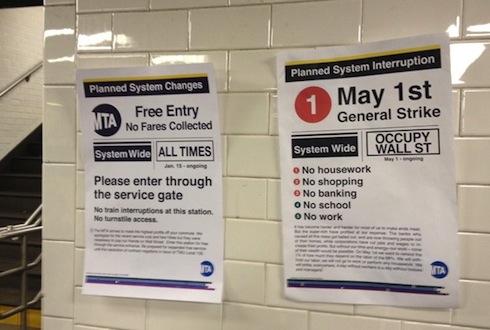 |
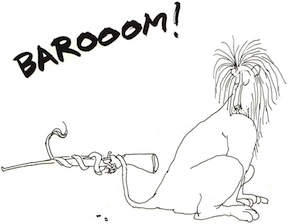
In Hribal’s book about animal resistance, he details the difference between refusal and sabotage. Apparently, performing animals about to go on rampages are very good at pretending nothing is wrong, and going along with the show as planned before snapping at the crucial moment. The story of the tiger who attacks his trainer is always already part of the show, or it wouldn’t be much of a show at all. So why refuse to go on when you can practice that bit where they put their head in your mouth?
 |
 |
What will be the importance of Lenin in the next two years of anti-capitalist revolutionary struggle? I don’t know, but I expect it will be minor on an absolute scale. If it’s as large as the temporary interest in Marx that preoccupied The Economist for a few weeks during the height of the housing crisis, I would be surprised, and that’s still relatively minor. The problem isn’t that Lenin is an empty symbol of revolution, but that the Left has a lot invested in his symbolic meaning, while our enemies have almost nothing. We have little to gain and a lot of time to lose – it’s a sucker bet. But things change; maybe they’ll do a biopic. Leo DiCaprio with a furrowed brow, a sharp goatee. Let them print the posters.
 Levi’s Berlin Print Shop |
 May 1 General Strike |
 is a managing editor of